Understanding Asbestos in Ogden: Identifying the 5 Most Common Types in Local Businesses
Ogden, Utah, a city rich in history and industrial development, carries with it a legacy of construction materials that were once considered revolutionary but are now recognized as hazardous. Among these, asbestos stands out as a pervasive threat, particularly within older commercial and industrial buildings. For business owners, property managers, and residents in Ogden, understanding the types of asbestos most commonly found in local establishments is not just a matter of compliance, but of public health and safety.
Asbestos, a naturally occurring fibrous mineral, was once lauded for its exceptional resistance to heat, fire, electricity, and chemical corrosion. These properties made it an ideal material for a myriad of applications, from insulation and fireproofing to roofing and flooring. Consequently, countless buildings constructed before the 1980s, including many businesses throughout Ogden's historic downtown, the industrial zones near the rail yard, and even older commercial properties in areas like the East Bench or Five Points, likely contain asbestos-containing materials (ACMs).
The danger of asbestos lies in its microscopic fibers. When disturbed, these fibers become airborne and, if inhaled, can lead to severe and often fatal diseases, including asbestosis, lung cancer, and mesothelioma. These health risks underscore the critical importance of identifying and managing asbestos in any commercial setting. This article will delve into the five most common types of asbestos that businesses in Ogden are likely to encounter, providing crucial information for identification and safe handling.
1. Chrysotile Asbestos: The Most Common Culprit
Chrysotile, often referred to as "white asbestos," is by far the most prevalent type of asbestos found globally, accounting for approximately 95% of all asbestos used commercially. Its widespread application means that it is highly probable for businesses in Ogden to encounter chrysotile in various forms.
Characteristics: Chrysotile fibers are curly and flexible, making them ideal for weaving and binding. This characteristic contributed to its use in a wide array of products where flexibility and strength were desired.
Common Applications in Ogden Businesses:
Roofing Materials: Many older commercial roofs, particularly those with asphalt shingles or felt, may contain chrysotile. Businesses in South Ogden and Washington Terrace with original roofing from mid-20th century construction could be at risk.
Floor Tiles and Adhesives: Vinyl floor tiles, linoleum, and the mastic adhesives used to install them frequently incorporated chrysotile. Walk through any older retail space or office building in Downtown Ogden or along 25th Street, and you might be walking on chrysotile-containing floors.
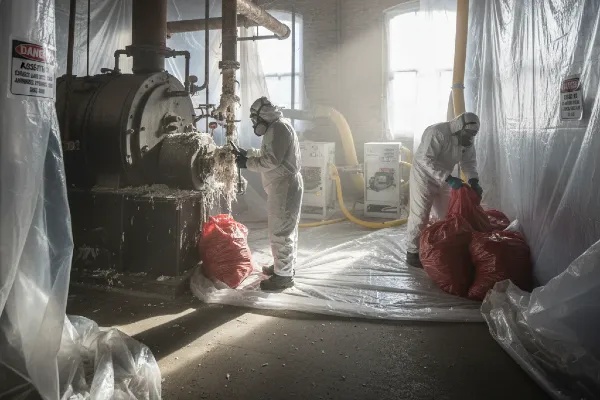
Insulation: Sprayed-on insulation, pipe insulation, and boiler insulation often contained chrysotile. This is a significant concern for businesses housed in older industrial buildings, warehouses, or any structure with original heating systems. When searching for "asbestos insulation removal Ogden," chrysotile is often the primary target.
Gaskets and Friction Products: Industrial machinery, heating systems, and even older vehicle brakes (if a business operates a repair shop) could contain chrysotile gaskets or friction materials. This highlights the varied environments where asbestos exposure might occur, from a restaurant's HVAC system to a small manufacturing plant near the Ogden River.
Cement Products: Asbestos cement sheets, pipes, and siding were popular for their durability. Businesses with older exterior cladding or utility pipes should be aware of this potential.
Detection and Management: Because of its prevalence, chrysotile is a primary concern for "asbestos testing Ogden" services. Its presence often necessitates professional "asbestos abatement Ogden" to ensure safe removal and disposal.
2. Amosite Asbestos: The "Brown" Threat
Amosite, known as "brown asbestos," is the second most common type of asbestos. Its fibers are straight and needle-like, making them more brittle than chrysotile but equally, if not more, dangerous due to their aerodynamic properties and tendency to penetrate lung tissue.
Characteristics: Amosite fibers are strong and heat-resistant, making them particularly effective in thermal insulation applications.
Common Applications in Ogden Businesses:
Thermal Insulation: Amosite was extensively used in thermal insulation products, including pipe insulation, boiler insulation, and fireproofing materials. Businesses with older heating plants, industrial facilities in the West Ogden area, or commercial kitchens might encounter amosite.
Insulation Board: Asbestos insulating board (AIB) was a common material used for fire protection, partitions, and ceiling tiles. Many commercial buildings, particularly those from the mid-20th century in areas like Jefferson Avenue or near Weber State University, could have AIB panels.
Cement Products: Similar to chrysotile, amosite was also incorporated into some asbestos cement products, adding to their strength and fire resistance.
Roofing and Gaskets: While less common than chrysotile, amosite could also be found in certain roofing felts and industrial gaskets.
Detection and Management: Amosite poses a significant health risk, and its identification often triggers immediate "asbestos removal Ogden" protocols. Due to its brittle nature, it can release fibers easily when disturbed, making professional handling critical for "asbestos inspection Ogden" projects.
3. Crocidolite Asbestos: The "Blue" Peril
Crocidolite, or "blue asbestos," is considered one of the most hazardous types of asbestos due to its exceptionally fine and sharp fibers. These fibers are particularly good at penetrating lung tissue, leading to a higher risk of serious respiratory diseases.
Characteristics: Crocidolite fibers are thin, brittle, and straight. Their unique hollow structure makes them highly resistant to acids and heat.
Common Applications in Ogden Businesses:
Spray-on Coatings and Insulation: Crocidolite's acid resistance made it valuable in chemical plants and laboratory settings. While less common in general commercial buildings, specific industrial sites or specialized businesses near Business Depot Ogden (BDO) with older infrastructure might have used crocidolite in spray-on insulation or coatings.
Pipe Insulation: Its superior resistance to corrosive chemicals meant crocidolite was sometimes used in pipe lagging in industrial environments.
Cement Products: In some instances, crocidolite was used in conjunction with other asbestos types in high-strength asbestos cement products.
Filters: Due to its fine fibers, crocidolite was occasionally used in industrial filters, which could be a concern for manufacturing businesses or those involved in certain processing industries.
Detection and Management: Given its high hazard potential, any detection of crocidolite requires urgent "asbestos abatement Ogden UT" services. Even minimal disturbance can release dangerous levels of fibers, making strict containment and specialized removal essential for "hazardous material removal Ogden."
4. Tremolite Asbestos: The Impurity
Tremolite asbestos is often found as a contaminant in other mineral deposits, including talc, vermiculite, and chrysotile asbestos. It's less commonly used on its own but can be present in a variety of ACMs as an impurity.
Characteristics: Tremolite fibers can vary in color from white to green to gray. They are typically found as fine, sharp crystals.
Common Applications in Ogden Businesses (as a contaminant):
Vermiculite Insulation: One of the most significant sources of tremolite exposure has been vermiculite insulation, particularly that sourced from the Libby mine in Montana (e.g., Zonolite). Many homes and businesses in older Ogden neighborhoods, including those in Canyon Road or Foothills, might have vermiculite insulation in attics or wall cavities. This is a common concern when searching for "attic insulation asbestos Ogden."
Talc-based Products: Historically, talcum powder and certain industrial talc products were contaminated with tremolite. While less common in current business operations, older industrial processes or storage of legacy products could pose a risk.
Chrysotile Contamination: Lower-grade chrysotile deposits could sometimes contain tremolite impurities, meaning that products primarily made of chrysotile might also contain trace amounts of tremolite.
Detection and Management: The presence of tremolite, especially in vermiculite insulation, necessitates specialized "asbestos testing Ogden" to confirm its presence. Due to its potential as a widespread contaminant, "asbestos removal services Ogden" must be equipped to handle this type of exposure carefully.
5. Actinolite Asbestos: Another Impurity
Similar to tremolite, actinolite asbestos is primarily found as a contaminant rather than a standalone commercial product. It shares similar fibrous characteristics and health risks with other amphibole asbestos types.
Characteristics: Actinolite fibers are typically dark green or gray and can be brittle or fibrous.
Common Applications in Ogden Businesses (as a contaminant):
Vermiculite and Talc: Like tremolite, actinolite can be found as an impurity in vermiculite insulation and certain talc deposits.
Composite Materials: In some historical contexts, actinolite might have been present in composite materials or rock wool insulation if the raw materials were contaminated. This is a rarer occurrence but something that "commercial asbestos testing Ogden" should consider when dealing with particularly old or unique building materials.
Naturally Occurring Deposits: While not directly used in products, actinolite can occur naturally in geological formations, and disturbance of these areas during construction or excavation in certain parts of Weber County could potentially release fibers.
Detection and Management: The approach to actinolite is similar to tremolite: it's identified through professional "asbestos inspection Ogden" and requires careful "asbestos abatement Ogden" if found in significant quantities. Its presence typically points to a broader issue of mineral contamination within building materials.
The Importance of Professional Asbestos Management in Ogden
For any business owner in Ogden, whether operating in a historic building near the Union Station or a more modern facility in a developing area, the potential for asbestos exposure is a serious concern. The health risks associated with asbestos are undeniable, and compliance with federal and state regulations regarding asbestos management is mandatory.
Ignoring the potential presence of asbestos can lead to severe health consequences for employees and customers, costly legal battles, and significant damage to a business's reputation. Proactive management begins with:
Awareness: Knowing that your building could contain asbestos is the first step. For example, if your business is in an older building in Central City or Lynnwood, the likelihood increases.
Professional Inspection and Testing: Never attempt to identify or disturb suspected ACMs yourself. Contact certified "asbestos testing Ogden" professionals to conduct a thorough inspection and take samples for laboratory analysis. Search terms like "asbestos survey Ogden" or "environmental testing Ogden" will lead to qualified companies.
Safe Abatement: If asbestos is confirmed, engage licensed and experienced "asbestos removal Ogden UT" contractors. These professionals have the specialized training, equipment, and procedures to safely contain, remove, and dispose of asbestos-containing materials, minimizing the risk of fiber release. Look for companies advertising "asbestos remediation Ogden" or "hazmat removal Ogden."
Training and Communication: If asbestos is present but undisturbed and deemed safe to leave in place (encapsulation), ensure that all employees are aware of its location and the protocols for avoiding disturbance.
In conclusion, the presence of asbestos, particularly chrysotile, amosite, and crocidolite, along with tremolite and actinolite as contaminants, is a reality for many businesses in Ogden. By understanding these common types and adhering to strict professional guidelines for inspection, testing, and abatement, Ogden businesses can protect their occupants and ensure a safe and healthy environment for everyone in the community.
